Speaking at the opening of the annual week of talks, which are intended to lay the ground work for the UN's next major climate summit in Poland later this year, the head of
The Environment Movement
''It is my earth''- we all know it but over the years starting from the industrial revolution we have forgotten the very place which has made it possible for us to survive.For our own selfish demands we have used it resources beyond repair and polluted it with the worst chemicals.If we don't look after our home then why should it look after us.If we don't take actions soon then own survival will be too hard to imagine in the future.
Monday, June 3, 2013
UN climate talks kick off in Bonn
Speaking at the opening of the annual week of talks, which are intended to lay the ground work for the UN's next major climate summit in Poland later this year, the head of
Sunday, May 19, 2013
Everest Ice Shrinking Fast, Scientists and Climbers Say
Everest isn't the same mountain it was when Jim Whittaker
became the first U.S. climber to summit the peak in 1963. The world's
highest peak has been shedding snow and ice for the past 50 years,
possibly due in part to global warming, new research says. (Take an Everest quiz.)
New analyses show Mount Everest has lost significant snow and ice cover over the past half century. In nearby Sagarmatha National Park,
Wind Energy’s Shadow: Turbines Drag Down Power Potential
As seemingly limitless as the air that swirls around us, wind has proven to be the world's fastest-growing source of renewable energy. Backers suggest wind power can continue growing as quickly as companies can raise turbines to capture it.
But some scientists are challenging that assumption, arguing that the laws of physics will limit wind's potential for meeting the world's energy needs. The controversy arises from the turbines themselves. "As soon as you start to put turbines into the wind, you start to change the resource," said Amanda Adams, a meteorologist who conducts atmospheric modeling at the University of North Carolina Charlotte. (See related quiz: "What You Don't Know About Wind Energy.")
Wednesday, May 8, 2013
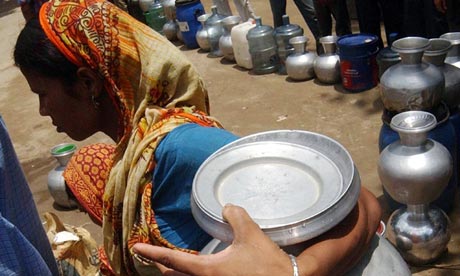
Safe drinking water disappearing fast in Bangladesh
According to a study by the World Bank's water and sanitation programme (pdf), about 28 million Bangladeshis, or just over 20% of the population, are living in harsh conditions in the "hard-to-reach areas" that make up a quarter of the country's landmass. The study found that char – land that emerges from riverbeds as a result of the deposit of
Wednesday, May 1, 2013
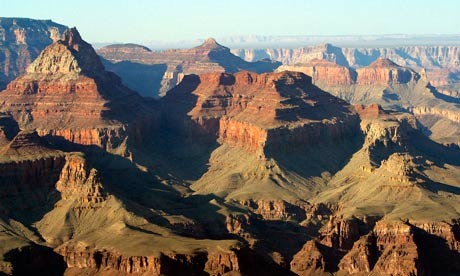
Grand Canyon uranium mining set to go ahead despite ban from Obama
Energy Fuels Resources has been given federal approval to reopen its old Canyon Mine, located six miles south of the canyon's popular South Rim entrance, that attracts nearly 5 million visitors a year.
Tuesday, April 23, 2013
Climate change experts head to “adaptation capital of the world”
Bangladesh
may be among the countries most vulnerable to climate change but it is
also to one that has done most to adapt to the impacts ahead, according
to the organisers of an international conference that takes place there
next week.
Bangladesh's
Prime Minister Sheikh Hasina will open the conference and Mary
Robinson, the former President of Ireland, will give the keynote speech
in the closing session.
The 7th International Conference on Community Based Adaptation to Climate Change takes place in Dhaka on 22-25 April, and will be managed by the International Institute for Environment and
Wednesday, April 17, 2013
Four actions to reduce the ‘forest footprint’ of commodities
Consumer demand for
palm oil is growing fast. It ends up in food products, cosmetics and
biodiesel, with demand set to double by 2030. With this expansion
leading to large-scale deforestation, how do we reduce the forest
footprint of commodities like palm oil, and increase demand for
‘deforestation-free’ ones?
There are a number of measures available to reduce deforestation and limit the forest footprint of commodities. Some of these include: legislation to restrict illegally-sourced imports, improving
Subscribe to:
Comments (Atom)