Speaking at the opening of the annual week of talks, which are intended to lay the ground work for the UN's next major climate summit in Poland later this year, the head of
''It is my earth''- we all know it but over the years starting from the industrial revolution we have forgotten the very place which has made it possible for us to survive.For our own selfish demands we have used it resources beyond repair and polluted it with the worst chemicals.If we don't look after our home then why should it look after us.If we don't take actions soon then own survival will be too hard to imagine in the future.
Monday, June 3, 2013
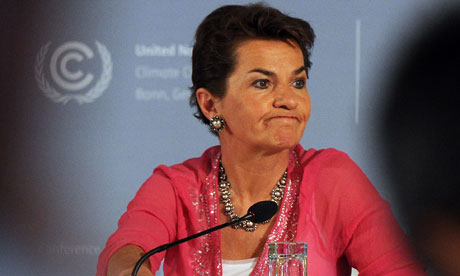
UN climate talks kick off in Bonn
Speaking at the opening of the annual week of talks, which are intended to lay the ground work for the UN's next major climate summit in Poland later this year, the head of
Sunday, May 19, 2013
Everest Ice Shrinking Fast, Scientists and Climbers Say
Everest isn't the same mountain it was when Jim Whittaker
became the first U.S. climber to summit the peak in 1963. The world's
highest peak has been shedding snow and ice for the past 50 years,
possibly due in part to global warming, new research says. (Take an Everest quiz.)
New analyses show Mount Everest has lost significant snow and ice cover over the past half century. In nearby Sagarmatha National Park,
Wind Energy’s Shadow: Turbines Drag Down Power Potential
As seemingly limitless as the air that swirls around us, wind has proven to be the world's fastest-growing source of renewable energy. Backers suggest wind power can continue growing as quickly as companies can raise turbines to capture it.
But some scientists are challenging that assumption, arguing that the laws of physics will limit wind's potential for meeting the world's energy needs. The controversy arises from the turbines themselves. "As soon as you start to put turbines into the wind, you start to change the resource," said Amanda Adams, a meteorologist who conducts atmospheric modeling at the University of North Carolina Charlotte. (See related quiz: "What You Don't Know About Wind Energy.")
Wednesday, May 8, 2013
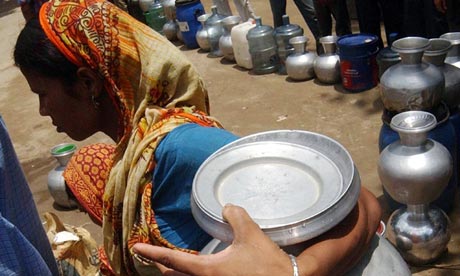
Safe drinking water disappearing fast in Bangladesh
According to a study by the World Bank's water and sanitation programme (pdf), about 28 million Bangladeshis, or just over 20% of the population, are living in harsh conditions in the "hard-to-reach areas" that make up a quarter of the country's landmass. The study found that char – land that emerges from riverbeds as a result of the deposit of
Wednesday, May 1, 2013
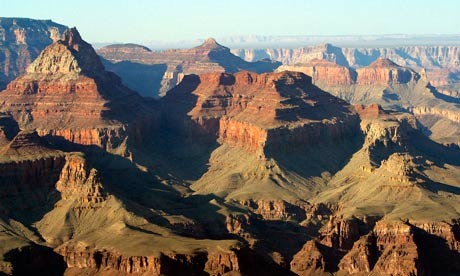
Grand Canyon uranium mining set to go ahead despite ban from Obama
Energy Fuels Resources has been given federal approval to reopen its old Canyon Mine, located six miles south of the canyon's popular South Rim entrance, that attracts nearly 5 million visitors a year.
Tuesday, April 23, 2013
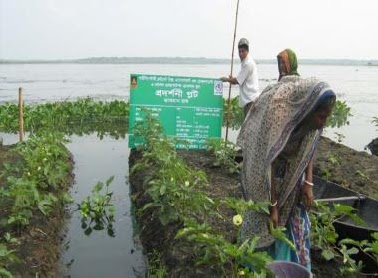
Climate change experts head to “adaptation capital of the world”
Bangladesh
may be among the countries most vulnerable to climate change but it is
also to one that has done most to adapt to the impacts ahead, according
to the organisers of an international conference that takes place there
next week.
Bangladesh's
Prime Minister Sheikh Hasina will open the conference and Mary
Robinson, the former President of Ireland, will give the keynote speech
in the closing session.
The 7th International Conference on Community Based Adaptation to Climate Change takes place in Dhaka on 22-25 April, and will be managed by the International Institute for Environment and
Wednesday, April 17, 2013
Four actions to reduce the ‘forest footprint’ of commodities
Consumer demand for
palm oil is growing fast. It ends up in food products, cosmetics and
biodiesel, with demand set to double by 2030. With this expansion
leading to large-scale deforestation, how do we reduce the forest
footprint of commodities like palm oil, and increase demand for
‘deforestation-free’ ones?
There are a number of measures available to reduce deforestation and limit the forest footprint of commodities. Some of these include: legislation to restrict illegally-sourced imports, improving
Ethiopia: Can it adapt to climate change and build a green economy?
Despite the
challenges, Ethiopia hopes to capitalise on its current economic growth
by becoming more resilient to the impacts of climate change while
developing its economy in a carbon neutral way.
Climate change poses a huge challenge to Ethiopia’s government and people. The country is faced with increasingly unpredictable rains, and sometimes the complete failure of seasonal rains –
Monday, April 8, 2013
In Sign of Warming, 1,600 Years of Ice in Andes Melted in 25 Years
Glacial ice in the Peruvian Andes that took at least 1,600 years to form has melted in just 25 years, scientists reported Thursday, the latest indication that the recent spike in global temperatures has thrown the natural world out of balance.
The evidence comes from a remarkable find at the margins of the Quelccaya ice cap in Peru,
the world’s largest tropical ice sheet. Rapid melting there in the
modern era is uncovering plants that were locked in a deep freeze when
the glacier advanced many thousands of years ago.
Dating of those plants, using a radioactive form of carbon in the plant
tissues that decays at a known rate, has given scientists an unusually
precise method of determining the history of the ice sheet’s margins.
Lonnie G. Thompson, the Ohio State University glaciologist whose team has worked intermittently on the Quelccaya ice cap for decades, reported the findings in a paper released online Thursday by the journal Science.
The paper includes a long-awaited analysis of chemical tracers in ice
cylinders the team recovered by drilling deep into Quelccaya, a record
that will aid scientists worldwide in reconstructing past climatic
variations.
Such analyses will take time, but Dr. Thompson said preliminary evidence
shows, for example, that the earth probably went through a period of
anomalous weather at around the time of the French Revolution, which
began in 1789. The weather presumably contributed to the food shortages
that exacerbated that upheaval.
“When there’s a disruption of food, this is bad news for any government,” Dr. Thompson said in an interview.
Of greater immediate interest, Dr. Thompson and his team have expanded
on previous research involving long-dead plants emerging from the
melting ice at the edge of Quelccaya, a huge, flat ice cap sitting on a
volcanic plain 18,000 feet above sea level.
Several years ago, the team reported on plants that had been exposed
near a meltwater lake. Chemical analysis showed them to be about 4,700
years old, proving that the ice cap had reached its smallest extent in
nearly five millenniums.
In the new research, a thousand feet of additional melting has exposed
plants that laboratory analysis shows to be about 6,300 years old. The
simplest interpretation, Dr. Thompson said, is that ice that accumulated
over approximately 1,600 years melted back in no more than 25 years.
“If any time in the last 6,000 years these plants had been exposed for
any five-year period, they would have decayed,” Dr. Thompson said. “That
tells us the ice cap had to be there 6,000 years ago.”
Meredith A. Kelly, a glacial geomorphologist at Dartmouth College who
trained under Dr. Thompson but was not involved in the new paper, said
his interpretation of the plant remains was reasonable.
Her own research on Quelccaya suggests that the margins of the glacier
have melted quite rapidly at times in the past. But the melting now
under way appears to be at least as fast, if not faster, than anything
in the geological record since the end of the last ice age, she said.
Global warming, which scientists say is being caused primarily by the
human release of greenhouse gases, is having its largest effects at high
latitudes and high altitudes. Sitting at high elevation in the tropics,
the Quelccaya ice cap appears to be extremely sensitive to the
temperature changes, several scientists said.
“It may not go very quickly because there’s so much ice, but we might
have already locked into a situation where we are committed to losing
that ice,” said Mathias Vuille, a climate scientist at the State
University at Albany in New York.
Throughout the Andes, glaciers are now melting so rapidly that
scientists have grown deeply concerned about water supplies for the
people living there. Glacial meltwater is essential for helping Andean
communities get through the dry season.
In the short run, the melting is producing an increase of water supplies
and feeding population growth in major cities of the Andes, the experts
said. But as the glaciers continue shrinking, trouble almost certainly
looms.
Douglas R. Hardy, a University of Massachusetts researcher who works in
the region, said, “How much time do we have before 50 percent of Lima’s
or La Paz’s water resources are gone?”
Tuesday, April 2, 2013
Asia forges ahead on climate change adaptation
THE 3rd Asia Pacific Adaptation Forum was held in Incheon, Korea from
March 18 to 20 with over 700 participants from across the region,
including government officials, NGOs, researchers and regional and
international organisations. It was hosted by the Ministry of
Environment of Korea and the Korea Environment Institute.
Tuesday, March 26, 2013
Tata Power registers another wind project under UNFCC
NEW DELHI: Tata Power today said its 50.4 MW wind energy plant in Gujarat has been registered under the United Nations Clean Development Mechanism (CDM), making it the company's third project to be part of this framework.
Located in Samana, the project will come under Clean Development
Mechanism of the United Nations Framework Convention on Climate Change
(UNFCCC).
"Samana wind plant is Tata Power's third CDM registered project, with the 50.4 MW wind project at Khandke, Maharashtra & 25 MW solar project at
Mary Robinson: Climate Change’s Gender Gap
When she was still a small and
bookish girl, holed up in the library of a Sacred Heart nuns’ school in
Dublin, Mary Robinson read about towering human-rights figures—Eleanor
Roosevelt, Mahatma Gandhi—and dreamed of doing something worthwhile with
her life. Before long, and famously, she did: first, as one of
Ireland’s youngest senators and a barrister taking up cases with the
European Court of Human Rights; then, as Ireland’s first female
president, promoting peace in Northern Ireland and reaching out to the
country’s marginalized communities; and, from 1997 to 2002, as the
United Nations’ high commissioner for human rights, bearing witness to,
and calling for international action on, vicious conflicts and
widespread suffering in places such as Kosovo, Sierra Leone, East Timor,
and Chechnya.
Monday, March 18, 2013
Climate change adaptation as a new academic discipline
The world of higher education is beginning to recognize adaptation to
climate change as a major research topic and an academic discipline,
according to one of the world’s leading adaptation specialists, Saleemul
Huq.“Adaptation is no longer about analytical framing: it’s a learning-by-doing process,” said Huq, a senior fellow at the International Institute for Environment and Development in London and a member of the United Nations Intergovernmental Panel on Climate Change.
As U.S. Cleans Its Energy Mix, It Ships Coal Problems Abroad
The port of Norfolk, Virginia, seen here in
1970, is the largest U.S. facility for exporting coal. It saw a surge of
activity last year as U.S. coal exports increased 17 percent to set a
new record.
Photograph by Charles Rotkin, Corbis
|
Thomas K. Grose
Published March 15, 2013
Ready for some good news about the environment?
Emissions of carbon dioxide in the United States are declining. But
don't celebrate just yet. A major side effect of that cleaner air in the
U.S. has been the further darkening of skies over Europe and Asia.
The
United States essentially is exporting a share of its greenhouse gas
emissions in the form of coal, data show. If the trend continues, the
dramatic changes in energy use in the United States—in particular, the
switch from coal to newly abundant natural gas for generating
electricity—will have only a modest impact on global warming, observers
warn. The Earth's atmosphere will continue to absorb heat-trapping CO2,
with a similar contribution from U.S. coal. It will simply be burned
overseas instead of at home.
Friday, March 15, 2013
Environmental threats could push billions into extreme poverty, warns UN
| A Filipino boy washes his face in murky waters in Manila. Inaction on the environment will accelerate global poverty, warns the UN. Photograph: Francis R Malasig/EPAAdd caption |
The number of people living in extreme poverty could increase by up to 3 billion by 2050 unless urgent action is taken to tackle environmental challenges, a major UN report warned on Thursday.
The 2013 Human Development Report hails better than expected progress on health, wealth and education in dozens of developing countries but says inaction on climate change, deforestation, and air and water pollution could end gains in the world's poorest countries and communities.
Monday, March 11, 2013
Climate Change Infographics
Climate Change is Real!
Thanks to extensive research and noticeable changes in weather and
storm prevalence, it’s getting harder to turn a blind eye to the reality
of climate change.
Since the Industrial Age spurred the increasing usage of fossil fuels
for energy production, the weather has been warming slowly. In fact,
since 1880, the temperature of the earth has increased by 1 degree
Celsius.
Although 72% of media outlets report on global warming with a skeptical air, the overwhelming majority of scientists believe that the extreme weather of the last decade is at least partially caused by global warming. Some examples of climate calamities caused partly by global warming include:
- Hurricane Katrina
- Drought in desert countries
- Hurricane Sandy
- Tornadoes in the Midwest
Subscribe to:
Comments (Atom)